
Top 3 Enterprise Imaging Platforms for Remote Collaboration Tools
Most hospitals still juggle three separate logins every time a referring physician requests images from another site.
The number of logins multiplies delays and compliance risks. By the end of this article you will see which three platforms solve the multi-location access problem, how each handles security and workflow automation, and why one option surfaces as the clearest choice when you need a single sign-on for remote reading teams.
What to Look For in Enterprise Imaging Platforms for Remote Collaboration Tools
Enterprise imaging platforms must deliver secure, scalable remote collaboration without compromising diagnostic quality or compliance. Medical facilities require systems that support real-time collaboration across multiple locations while maintaining strict security standards.
Zero-footprint DICOM viewing under 2 seconds represents a critical performance threshold. Radiologists and referring physicians need instant access to studies without downloading software or waiting for image loading. This speed directly impacts diagnostic workflow efficiency and patient care timelines.
End-to-end encryption must meet both HIPAA and GDPR requirements for every data transmission. Medical imaging contains highly sensitive patient information that demands protection throughout the entire communication chain. Encryption standards protect data at rest and in transit across all network connections.
Real-time multi-site access requires role-based permissions that control who can view, edit, or share specific studies. Different user types need varying access levels based on their clinical roles and organizational relationships. These controls prevent unauthorized viewing while enabling necessary collaboration between healthcare teams.
Vendor-neutral archives must support HL7 and FHIR interoperability standards for seamless data exchange. Image archives need to work together with existing hospital information systems without requiring custom development or proprietary formats. This compatibility ensures medical facilities can maintain their current infrastructure investments.
Built-in audit logging must capture every study access with timestamps, user identification, and action details. Compliance officers require complete documentation trails for regulatory inspections and security reviews. These logs support both internal governance and external audit requirements.
Mobile access through thin-client viewers enables physicians to review images on tablets and smartphones without compromising image quality. Healthcare professionals need diagnostic capabilities regardless of their physical location or device preferences. Thin-client viewers deliver full functionality while maintaining security protocols across all mobile platforms.
1. Medicai - Best Overall
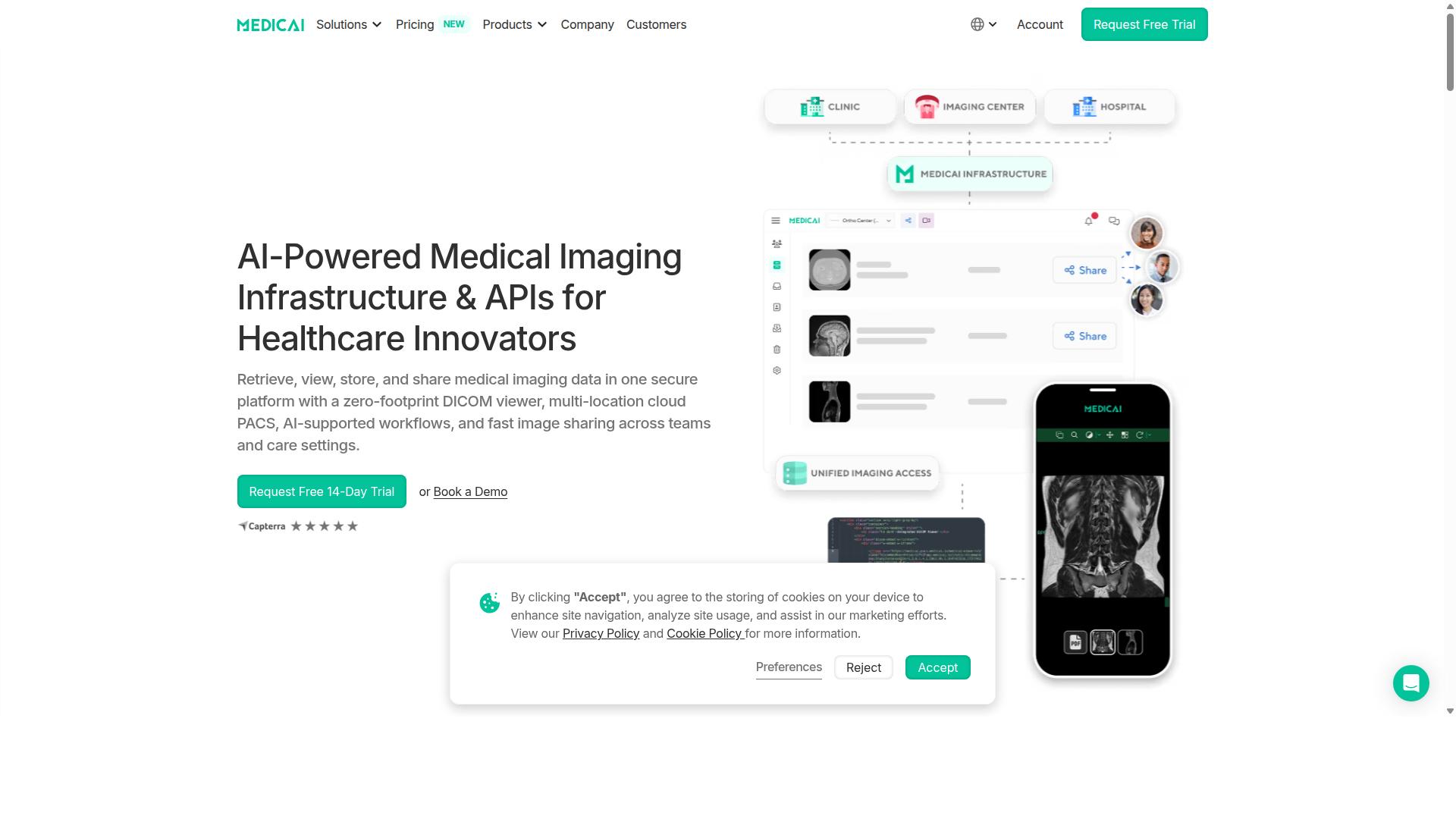
Medicai stands out for combining zero-footprint viewing, secure multi-location exchange, and AI-supported workflows in a single HIPAA/GDPR-compliant platform.
Enterprise imaging teams need tools that work across different locations without creating extra steps. The platform handles image retrieval, viewing, storage, and sharing in one secure environment.
Research suggests that unified architectures reduce delays that occur when teams switch between multiple systems. Global availability supports hospitals, imaging centers, and referring sites that work across borders.
Compliance certifications provide the foundation for secure data handling. Role-based access controls and audit logging maintain security standards across all user interactions.
Secure Cloud PACS and Zero-Footprint DICOM Viewer
Medicai's cloud PACS delivers a zero-footprint DICOM viewer that runs in any browser without local installation.
Zero-install access means clinicians can review studies from any device with internet connectivity. Thin-client viewer technology eliminates the need for software downloads or IT department approvals.
HIPAA/GDPR compliance covers data storage, transmission, and access controls. 300k+ visualizations of DICOM studies occurred in the last year through this browser-based approach.
Cloud PACS infrastructure supports both routine diagnostic work and specialized consultation requests. FDA/CEE cleared viewers meet regulatory requirements for clinical use across different regions.
Multi-Location Image Exchange and Vendor Neutral Archive
The platform's vendor-neutral archive enables seamless exchange across hospitals, imaging centers, and referring sites worldwide.
1.7M+ studies currently reside in storage with 2M+ imaging studies uploaded to date. Multi-site access supports 70 clinics and hospitals operating on the platform.
50M+ yearly API transactions demonstrate the system's capacity for high-volume data exchange. Listed integrations include Microsoft Azure, Amazon AWS, and Hetzner cloud infrastructure.
The vendor neutral archive approach prevents vendor lock-in while maintaining interoperability standards. Image sharing occurs through secure connections that comply with cross-enterprise document sharing protocols.
AI-Supported Workflows and Structured Reporting
Built-in AI tools accelerate workflows and produce consistent structured reports.
Partnerships with MD.ai, Rayscape.ai, and Boehringer Ingelheim focus on AI validation and workflow automation. Radiology AI co-pilot functionality assists with diagnostic imaging analysis.
Structured reporting for radiology creates standardized output formats that improve communication between specialists. 10,000+ active doctors use these tools for patient case management.
AI-supported workflows maintain human oversight while reducing time spent on repetitive tasks. Interoperability features support connections with existing RIS and PACS systems through HL7 and FHIR standards.
2. PostDICOM
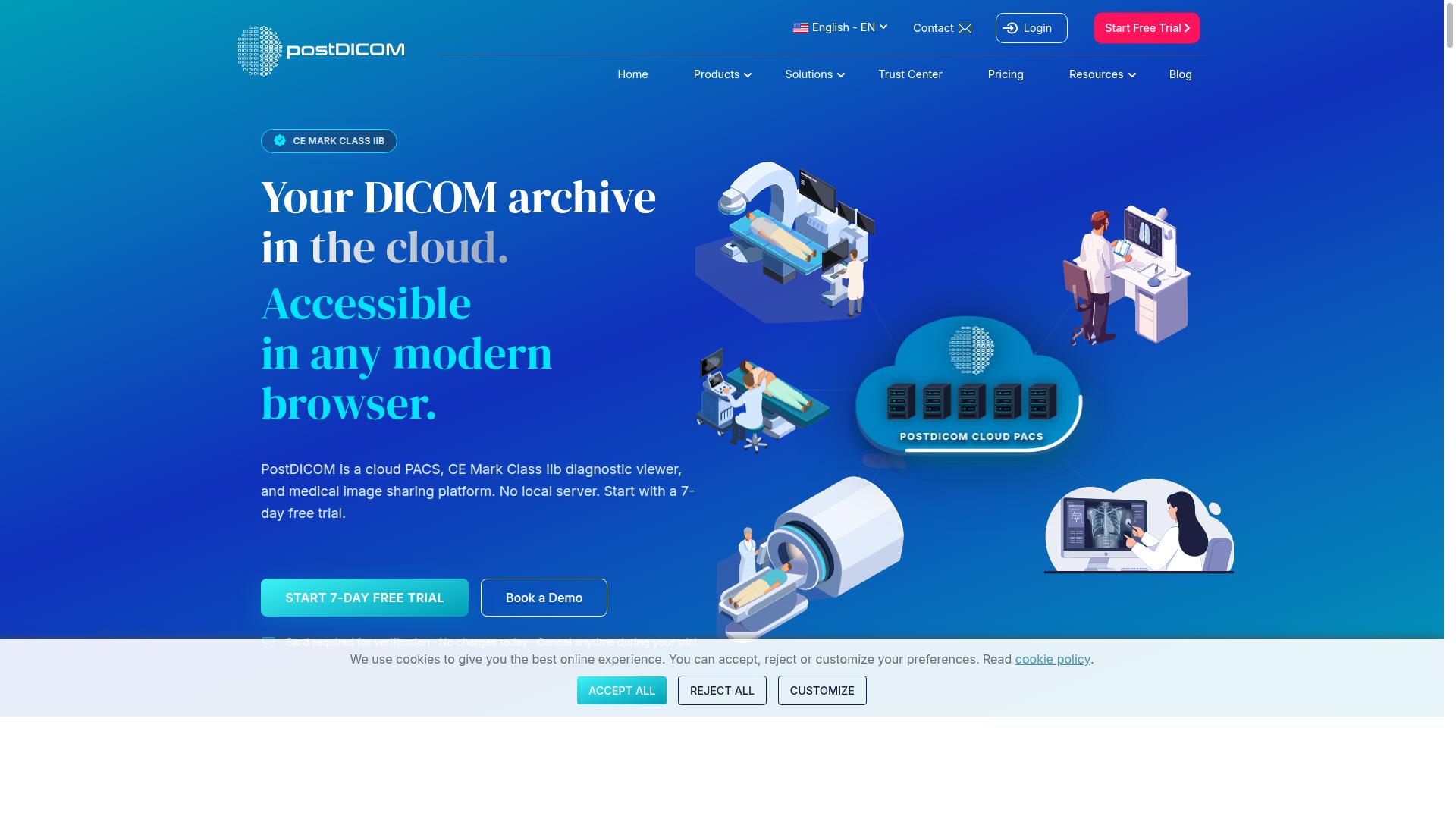
PostDICOM offers cloud-hosted imaging storage and a browser-based viewer for smaller practices. The platform supports essential radiology workflow needs through its cloud PACS infrastructure. Medical imaging teams gain access to diagnostic tools without heavy local installations.
This solution addresses common enterprise imaging challenges by providing flexible deployment options. Organizations can manage DICOM studies through standard web browsers across different locations. The approach reduces infrastructure complexity while maintaining necessary access controls.
Smaller facilities often choose this option for straightforward implementation requirements. The platform accommodates various medical imaging specialties including dental, orthopedic, and veterinary practices. Remote teams benefit from consistent access patterns across different user groups.
Cloud Storage and Web-Based Viewer Capabilities
PostDICOM stores DICOM studies in the cloud and provides browser access to images. The system handles medical imaging data through standard web interfaces without requiring specialized software installations. Users interact with studies through familiar browser environments.
The zero-footprint HTML5 viewer supports multiplanar reconstruction and volume rendering functions. Three-dimensional visualization tools help radiologists examine complex anatomical structures more thoroughly. Measurement and annotation capabilities remain available within the same interface.
Teams can access diagnostic imaging tools from any modern browser across different devices. This setup supports consistent radiology workflow patterns regardless of user location. The platform maintains image quality standards necessary for clinical decision-making processes.
Remote Sharing and Multi-User Access Features
Users can share studies and grant multi-user access through PostDICOM. Medical imaging departments can distribute studies to referring physicians and specialists through secure links. Access permissions adjust based on clinical role requirements.
The platform supports image sharing workflows across different healthcare settings. Research teams and educational institutions utilize teaching libraries for training purposes. Multi-site access enables collaboration between radiologists working from separate locations.
Study sharing features accommodate telehealth and teleradiology consultation needs. Healthcare organizations can extend diagnostic imaging access to external partners when necessary. The system maintains role-based access controls throughout the sharing process.
3. Tricefy
Tricefy specializes in ultrasound image sharing and patient engagement portals. The platform focuses on medical imaging workflows for OB/GYN, cardiology, and vascular practices.
Cloud-based delivery allows teams to handle DICOM images without local servers. Enterprise imaging teams use this approach when they need remote collaboration across multiple sites.
The system connects with existing EMR systems through standard HL7 interfaces. This integration supports radiology workflow without requiring new infrastructure investments.
Ultrasound-Focused Remote Collaboration Tools
Tricefy enables ultrasound teams to collaborate remotely on studies. The platform supports real-time collaboration through its zero-footprint viewer.
Teams can access diagnostic imaging studies from any location with internet connectivity. This approach works well for multi-site practices that need consistent image management across locations.
The system includes automated workflows that reduce manual steps in study routing. Referring physicians gain access through secure portals that maintain audit logging for compliance.
Image annotation tools allow specialists to mark findings directly on DICOM images. These marks remain visible to all authorized users during the review process.
Secure Sharing and Patient Portal Integration
Tricefy integrates secure sharing with patient portal access. Patients receive study results through a dedicated interface that maintains privacy standards.
The platform supports role-based access controls that limit data visibility by user type. This structure helps practices meet regulatory requirements for medical imaging distribution.
Clinical collaboration features enable second opinions through controlled study sharing. Specialists can review cases without needing to transfer files through unsecured channels.
Automated reporting templates standardize documentation across different practice locations. This consistency supports enterprise imaging initiatives that span multiple departments.
How to Choose the Right Option
Selection hinges on matching platform capabilities to the specific needs of hospitals, imaging centers, and specialty providers. Radiology departments often prioritize real-time collaboration and structured reporting, while cardiology teams focus on mobile access for urgent case reviews. Orthopedics groups typically require tools that support high-resolution image viewing during remote consultations.
Enterprise imaging platforms must address the diverse requirements of specialty care providers across different clinical workflows. Hospitals managing multiple departments need solutions that work together with existing PACS and RIS systems while maintaining HIPAA compliance. Imaging centers serving referring physicians require secure study sharing capabilities that work across various specialties.
Neurology and oncology practices benefit from platforms supporting multi-site access for tumor board discussions. Ophthalmology and pulmonology departments often need DICOM viewers that handle modality-specific imaging formats without compromising diagnostic quality. The right enterprise imaging solution accommodates these varied clinical needs through flexible deployment options.
Virtual care providers and telemedicine platforms require zero-footprint viewers that enable seamless remote collaboration. Teleradiology services depend on reliable DICOM routing capabilities for efficient study distribution across locations. Personal injury lawyers and clinical trial coordinators need secure image access that maintains chain of custody for legal and research documentation.
Medical education organizations utilize enterprise imaging platforms for case-based learning across multiple specialties. Patient portals allow individuals to access their own medical imaging results while maintaining privacy standards. The selection process involves evaluating how well each platform supports these distinct user groups and their specific collaboration requirements.
Final Verdict
After comparing features, compliance, and scalability, Medicai delivers the strongest balance for enterprise-wide remote imaging collaboration. The platform combines FDA/CEE Cleared Viewers with proven capacity to handle large volumes of diagnostic imaging across multiple locations.
Research suggests that organizations need concrete proof of security, compliance, and operational scale before committing to a new imaging solution. Medicai provides this evidence through its track record of 1M+ studies transacted or processed per year and 1.7M+ studies in storage.
These metrics demonstrate sustained performance in clinical environments where radiologists and referring physicians require reliable access to DICOM studies. The platform also maintains HIPAA and GDPR compliance while following OWASP security guidelines.
Additional validation comes from its Microsoft Azure partnership and deployment across 70 clinics and hospitals with 10,000+ active doctors. This network has processed 2M+ imaging studies uploaded and generated 300k+ visualizations of DICOM studies in the last year.
50M+ yearly API transactions further indicate robust interoperability capabilities for integration with existing radiology information systems and hospital workflows. The combination of regulatory clearances, scale metrics, and enterprise partnerships positions Medicai as the most substantiated option among enterprise imaging platforms for remote collaboration requirements.
Recommended Resources: