
PICOM365 vs Medicai for Pay-Per-Study Pricing
Radiology teams evaluating pay-per-study pricing need to compare actual per-study costs, storage limits, and API access before signing any contract. Many platforms bury extra fees for long-term archiving or advanced integration after the initial agreement. This article lays out the exact differences so the choice becomes a single decision rather than an ongoing negotiation.
By the final section you will know which vendor charges less per study at your expected volume, which platform includes API access without extra tiers, and whether Medicai or PICOM365 better matches your compliance and storage needs.
Quick Verdict: PICOM365 vs Medicai for Pay-Per-Study Pricing
PICOM365 and Medicai each handle pay-per-study billing differently, with Medicai offering subscription tiers that include fixed storage limits and unlimited users.
The core difference comes down to predictability versus flexibility. Medicai's subscription approach gives organizations steady monthly costs regardless of study volume.
Medicai's Starter and Standard plans range from monthly subscriptions with defined storage allocations. These tiers provide clear budgeting for radiology departments and imaging centers managing regular workflow.
PICOM365 operates on a per-study model that charges based on individual study volume without fixed monthly commitments.
Organizations processing high study volumes often prefer Medicai's subscription structure. The platform handles over 1 million studies annually across 70 clinics and hospitals while maintaining HIPAA and GDPR compliance standards.
Cloud storage reaches 1.7 million studies with secure access for 10,000 active doctors on the network. This scale supports consistent pricing that does not fluctuate with monthly study counts.
Per-study billing models can create cost uncertainty when volumes spike unexpectedly. Medicai's approach eliminates this variability while supporting AI-assisted diagnosis workflows and multi-modality capabilities.
At a glance: how Medicai compares to PICOM365, Medicai for Pay-Per-Study Pricing on the features that matter most.
| Feature | Medicai | PICOM365 | Medicai for Pay-Per-Study Pricing |
|---|---|---|---|
| Pay-Per-Study Pricing | ✓ | $3-$4/study | — |
What Is Medicai?
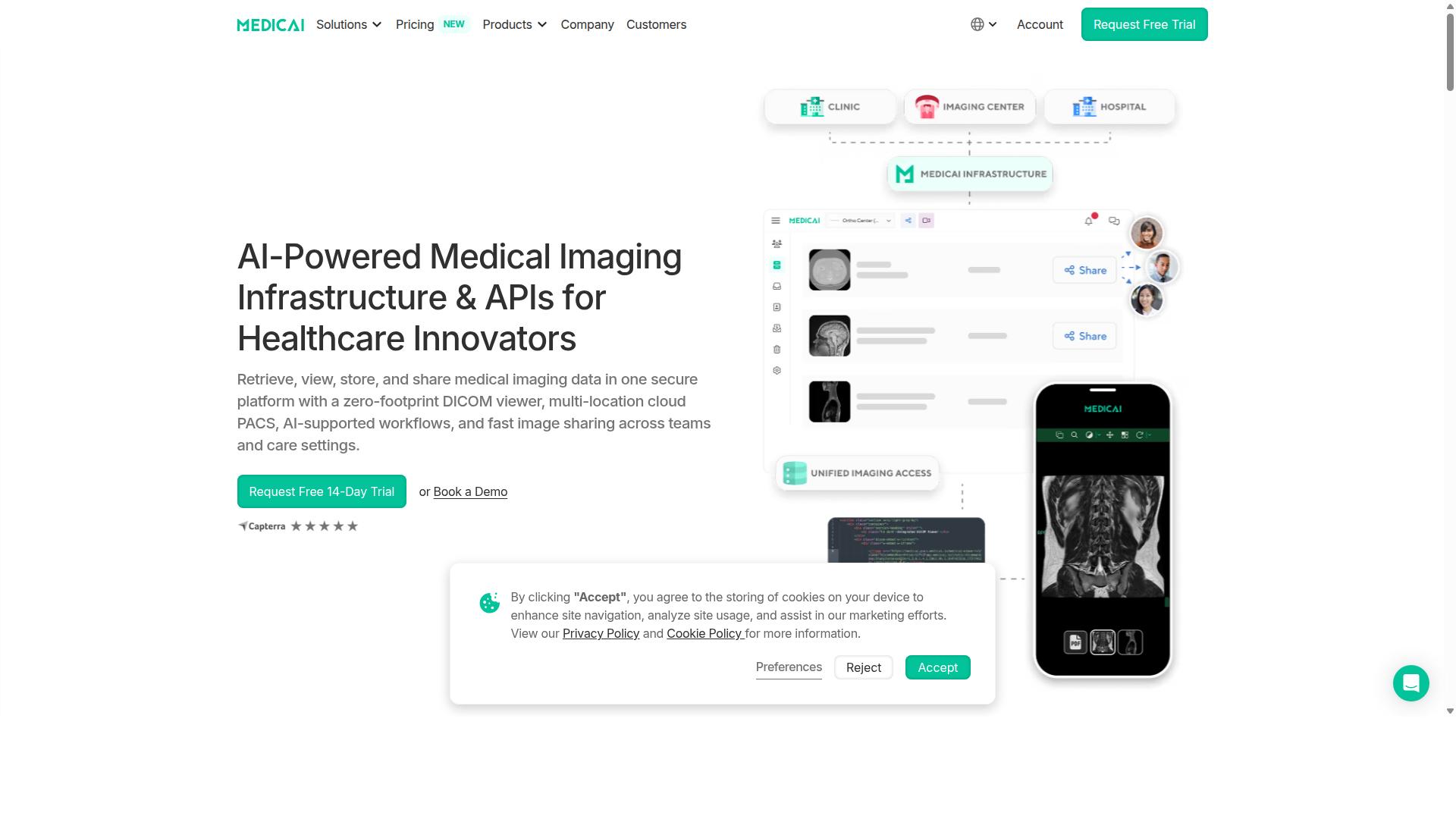
Medicai is a cloud-based platform that consolidates medical imaging retrieval, storage, and sharing inside a single secure workspace with a zero-footprint viewer. The platform supports healthcare providers across multiple care settings through its Imaging Infrastructure as a Service model.
Core functions include uploading DICOM studies, storing them in a multi-location cloud PACS, and enabling secure exchange between teams. The zero-footprint viewer allows access from any device without installing software, which simplifies workflows for teleradiology and enterprise imaging environments.
Security and compliance features include HIPAA and GDPR standards, along with FDA and CEE clearance for regulated markets. These certifications address data encryption and audit trail requirements that matter for pay-per-study pricing models.
Additional capabilities include AI-supported workflows and interoperability across systems.
The platform focuses on reducing turnaround time through streamlined study upload and fast image sharing.
What Is PICOM365?
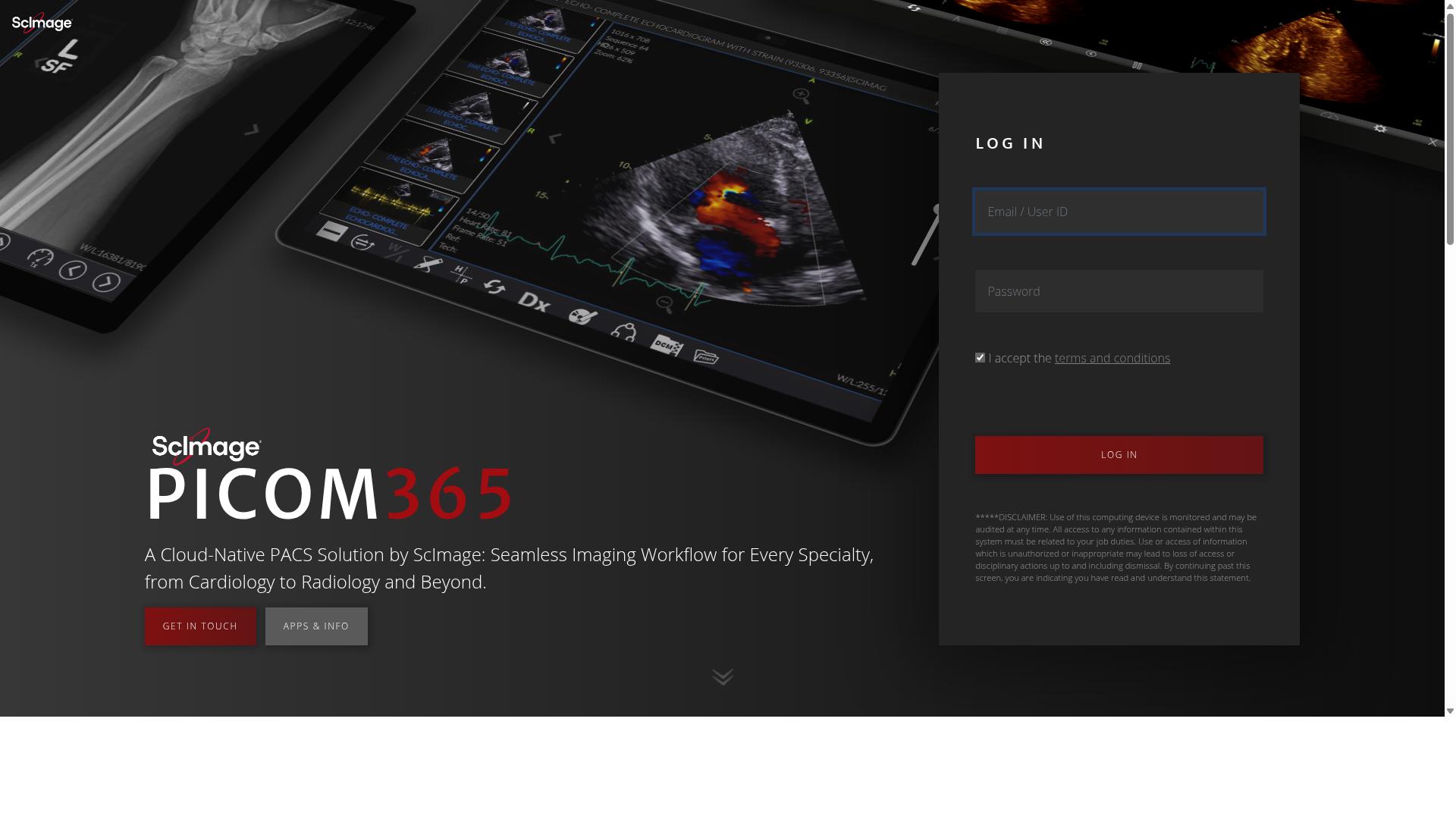
PICOM365 is a pay-per-study imaging platform that bills practices only for the studies they process rather than a flat monthly fee.
This approach differs from traditional subscription models. Practices pay based on actual usage, which can help control costs during slower periods.
Per-case billing allows smaller clinics and teleradiology groups to access imaging tools without committing to ongoing monthly expenses. The platform handles study upload, DICOM viewer access, and radiologist reporting through a single workflow.
Users upload medical images, route studies to appropriate specialists, and generate reports within the same system. This structure supports multi-modality studies and maintains HIPAA compliance through data encryption and audit trail features.
The platform includes PACS integration capabilities and supports image annotation for collaborative review. Practices can share images securely with referring physicians and maintain role-based access controls throughout the process.
What Is Medicai for Pay-Per-Study Pricing?

Medicai itself uses monthly subscriptions rather than per-study billing, so any pay-per-study workflow would require external metering or integration.
The platform offers two fixed subscription tiers for monthly billing. Starter provides 500 GB of cloud storage with unlimited user accounts and no connected locations.
Standard increases capacity to 2 TB of cloud storage, also includes unlimited user accounts, and supports one connected location.
Yearly billing reduces these rates by 15 percent. Starter drops to $209 per month and Standard drops to $639 per month when paid annually.
Enterprise customers receive custom pricing and the option for per-study pricing, allowing organizations to align costs directly with radiology workflow volume.
Both published tiers include unlimited user accounts, so teams avoid additional per-seat fees when scaling radiologist reporting or teleradiology services.
A one-time $1,000 DICOM Gateway Setup fee applies per location, which supports PACS integration and study upload workflows.
Compared with PICOM365, Medicai's subscription model provides predictable monthly costs for medical imaging platforms without per-case billing complexity at the Starter and Standard levels.
Features Compared
Feature overlap includes cloud storage, viewer capabilities, and integration methods, with Medicai emphasizing its zero-footprint viewer and API volume.
Both platforms support core radiology workflow needs, yet their approaches to storage, security, and integration differ in important ways.
Examining these areas side by side helps medical imaging practices evaluate which solution aligns with pay-per-study pricing models and operational requirements.
Storage and Scalability
Medicai allocates 500 GB on its Starter plan and 2 TB on Standard, with the option to add locations in the higher tier.
These defined tiers give practices clear visibility into costs when managing study upload volumes and image annotation tasks.
PICOM365's storage model is usage-based, which can create variability for organizations with fluctuating study volumes.
Enterprise customers of Medicai can scale to custom cloud storage with multiple connected locations, supporting teleradiology networks that span several sites.
This structure benefits facilities that need predictable billing as they grow their radiology workflow capacity.
Compliance and Security
Both platforms claim HIPAA compliance, while Medicai additionally states GDPR adherence and FDA/CEE clearance.
Medicai follows OWASP security guidelines, which strengthens protection for patient data during secure sharing and report generation.
These certifications support organizations that handle sensitive imaging across multiple jurisdictions or require vendor neutral archive capabilities.
PICOM365 maintains HIPAA compliance, although the breadth of its additional security certifications is less clearly documented in public materials.
For facilities prioritizing regulatory alignment in enterprise imaging, Medicai's documented clearances provide measurable assurance.
Integration and API Access
Medicai reports 50 million yearly API transactions and offers DICOM gateway connections to external systems.
This capacity supports high-volume environments that require PACS integration, HL7 FHIR compatibility, and modality worklist automation.
Facilities using pay-per-study pricing often need reliable study routing and usage analytics, which benefit from strong API infrastructure.
PICOM365 also supports integration points, though specific API transaction volumes and gateway options remain general in available documentation.
Medicai's documented scale in API transactions positions it well for practices that need consistent interoperability standards and data encryption across connected systems.
Pricing Compared
Medicai's fees are published monthly subscription prices, whereas PICOM365 charges on a per-study basis. This distinction matters most when radiology practices evaluate their total spend against actual case volume.
The Starter plan costs $249 per month and covers 500 GB of cloud storage with unlimited user accounts. The Standard plan costs $749 per month and adds 2 TB of storage plus one connected location. Both plans support unlimited users without extra charges.
Enterprise customers receive custom pricing that scales with storage needs and multiple connected locations. A one-time $1,000 DICOM Gateway setup fee applies per location, while yearly billing offers 15 percent savings on the monthly rates.
PICOM365's exact per-study rates are not listed here. Pay-per-study pricing can benefit practices with very low or unpredictable volumes, yet the lack of published figures makes budgeting less predictable than Medicai's transparent monthly model.
Research suggests that subscription models often provide more predictable costs than per-study billing when monthly volumes exceed a certain threshold. For practices running consistent radiology workflow, the published Medicai rates may offer clearer cost control compared with variable per-case billing that depends on study counts and add-on fees.
Who Should Choose Medicai
Hospitals and imaging centers managing more than 500 GB of monthly imaging data usually benefit from Medicai's flat-rate subscription.
Orthopedics and neurology practices often find this model predictable. They avoid spikes in monthly fees when diagnostic volumes increase unexpectedly.
Oncology and cardiology teams process complex multimodal studies under the same fixed cost. Radiology groups avoid surprise charges during busy periods.
Medicai processed over 300,000 DICOM visualizations last year. This volume demonstrates the platform's capacity at scale.
Ophthalmology and pulmonology departments rely on consistent pricing. They focus clinical resources on patient care rather than billing management.
Obstetrics-gynecology and gastroenterology specialists use the same subscription structure. Dentistry practices benefit from predictable costs across different imaging modalities.
Virtual care providers and telemedicine platforms operate under fixed overhead. Teleradiology services gain cost certainty when serving multiple health systems.
Personal injury lawyers and tumor boards access studies without per-case fees. Medical education organizations run training programs on a stable budget.
Clinical trials require consistent data access across study periods. The subscription model supports long-term research without variable study costs.
Patients access their imaging through a dedicated portal under the same pricing structure. This unified approach eliminates separate access fees for different user groups.
Who Should Choose PICOM365
Practices with highly variable monthly study volumes may prefer PICOM365's usage-based billing over fixed subscriptions. This approach allows payment only when studies are processed, aligning expenses with actual clinical activity.
Smaller clinics or those with seasonal fluctuations often find pay-per-study pricing more predictable for budgeting. A facility handling 20 studies one month and 80 the next avoids committing to unused capacity.
Independent radiologists and teleradiology groups frequently evaluate usage-based models when their case load changes week to week. The model shifts risk away from fixed monthly fees toward a cost-per-study structure.
Organizations exploring cloud storage solutions may start with a usage-based platform to test workflow fit. This reduces upfront commitment while allowing later transition to subscription models if volumes stabilize.
Before selecting this approach, administrators should review their historical study volumes across modalities. Patterns in turnaround time and study routing provide insight into whether per-case billing supports long-term growth targets.
Who Should Choose Medicai for Pay-Per-Study Pricing
Organizations wanting Medicai's infrastructure but billed per study would need to layer a custom metering solution on top of the subscription.
Medicai does not offer native per-study pricing. Enterprise customers can explore per-study pricing with Medicai directly.
Third-party analytics dashboards can help track usage across studies. These tools work together with existing billing systems to monitor consumption patterns.
The platform provides flexible subscription tiers starting at $249 per month for the Starter plan. This plan includes 500 GB of cloud storage and unlimited user accounts.
Custom metering allows organizations to allocate costs based on actual study volume. The setup requires technical integration between the analytics platform and Medicai's billing dashboard.
Standard plans provide 2 TB of cloud storage for $749 monthly. Additional connected locations require enterprise-level custom pricing.
Usage tracking becomes important when teams need visibility into study routing and turnaround time. Custom solutions can capture these metrics through API connections.
Yearly billing offers 15 percent savings compared to monthly payments. Enterprise customers receive custom cloud storage allocations based on their specific requirements.
The DICOM Gateway setup costs $1,000 as a one-time fee per location. This infrastructure supports secure sharing and multi-modality imaging workflows.
Teams requiring detailed usage analytics should evaluate external dashboard solutions. These tools can generate reports on study upload volumes and radiologist reporting patterns.
Medicai maintains HIPAA compliance through its cloud infrastructure. Data encryption and audit trail features support secure medical imaging operations.
Final Verdict
Choose Medicai when predictable monthly costs and large storage allocations outweigh the need for native per-study billing. Organizations handling high imaging volumes benefit from its subscription model, which provides cost certainty regardless of how many studies are processed each month.
1M+ studies processed annually combined with 50M+ API transactions demonstrate the platform's capacity for enterprise-scale operations. These figures reflect consistent performance across multiple facilities rather than isolated case studies.
Medicai maintains HIPAA and GDPR compliance while following OWASP security guidelines. This compliance record supports healthcare organizations that require documented security standards for their medical imaging workflows.
1.7M+ studies in storage show that Medicai accommodates substantial data volumes without requiring users to monitor per-study charges. The platform currently serves 70 clinics and hospitals with 10,000+ active doctors relying on its infrastructure.
High-volume radiology practices often find that subscription-based pricing reduces administrative overhead compared to tracking individual case costs. This approach aligns with departments seeking to optimize their radiology workflow without managing separate billing cycles for each study.
PICOM365 offers per-study billing that may suit practices with variable monthly volumes. However, organizations processing consistent high volumes typically benefit more from Medicai's predictable cost structure and integrated storage capacity.
Recommended Resources: