
ProtonPACS vs PICOM365 vs Medicai for Pay-Per-Study Pricing
Most radiology teams pay per study yet still face fixed monthly platform fees that erase the supposed savings. The gap appears when invoices arrive and the "pay-per-study" line item ends up bundled with storage tiers, viewer seats, and AI add-ons that were never quoted upfront.
By the final section you will know exactly which of ProtonPACS, PICOM365, and Medicai quotes a transparent price per study with no hidden tiers, how each platform's storage and viewer count against that price, and which workflow features actually ship inside the quoted fee.
Quick Verdict: ProtonPACS vs PICOM365 vs Medicai for Pay-Per-Study Pricing
This quick verdict breaks down pay-per-study pricing models for ProtonPACS, PICOM365, and Medicai across storage, connectivity, and viewer access.
ProtonPACS structures pay-per-study costs around individual study volumes with separate charges for storage and connectivity. Users pay per study processed plus additional fees for image archive expansion and DICOM routing between locations.
PICOM365 uses a similar per-study model but ties costs to both study upload and image sharing activities. Additional charges apply for DICOM viewer access beyond basic radiology workflow requirements.
Medicai offers monthly billing with Starter at $249 per month for 500 GB cloud storage and unlimited user accounts. The Standard tier costs $749 per month and includes 2 TB cloud storage plus one connected location. Enterprise customers receive custom pricing for multiple connected locations and external locations.
Yearly billing provides 15% savings with Starter at $209 per month and Standard at $639 per month when paid annually. A DICOM Gateway Setup fee of $1,000 applies per location for enterprise deployments.
Per-study pricing remains available for enterprise customers seeking flexible radiology billing options. The free 14-day trial of Starter plan features requires no credit card commitment.
Medicai provides clearer cost transparency through published subscription tiers with defined storage allowances. ProtonPACS and PICOM365 maintain more flexible per-study structures but require custom quotes for storage expansion and connectivity needs.
At a glance: how Medicai compares to ProtonPACS, PICOM365, Medicai for Pay-Per-Study Pricing on the features that matter most.
| Feature | Medicai | ProtonPACS | PICOM365 | Medicai for Pay-Per-Study Pricing |
|---|---|---|---|---|
| Pay-Per-Study Pricing | ✓ | ✓ | ✓ | — |
What Is Medicai?
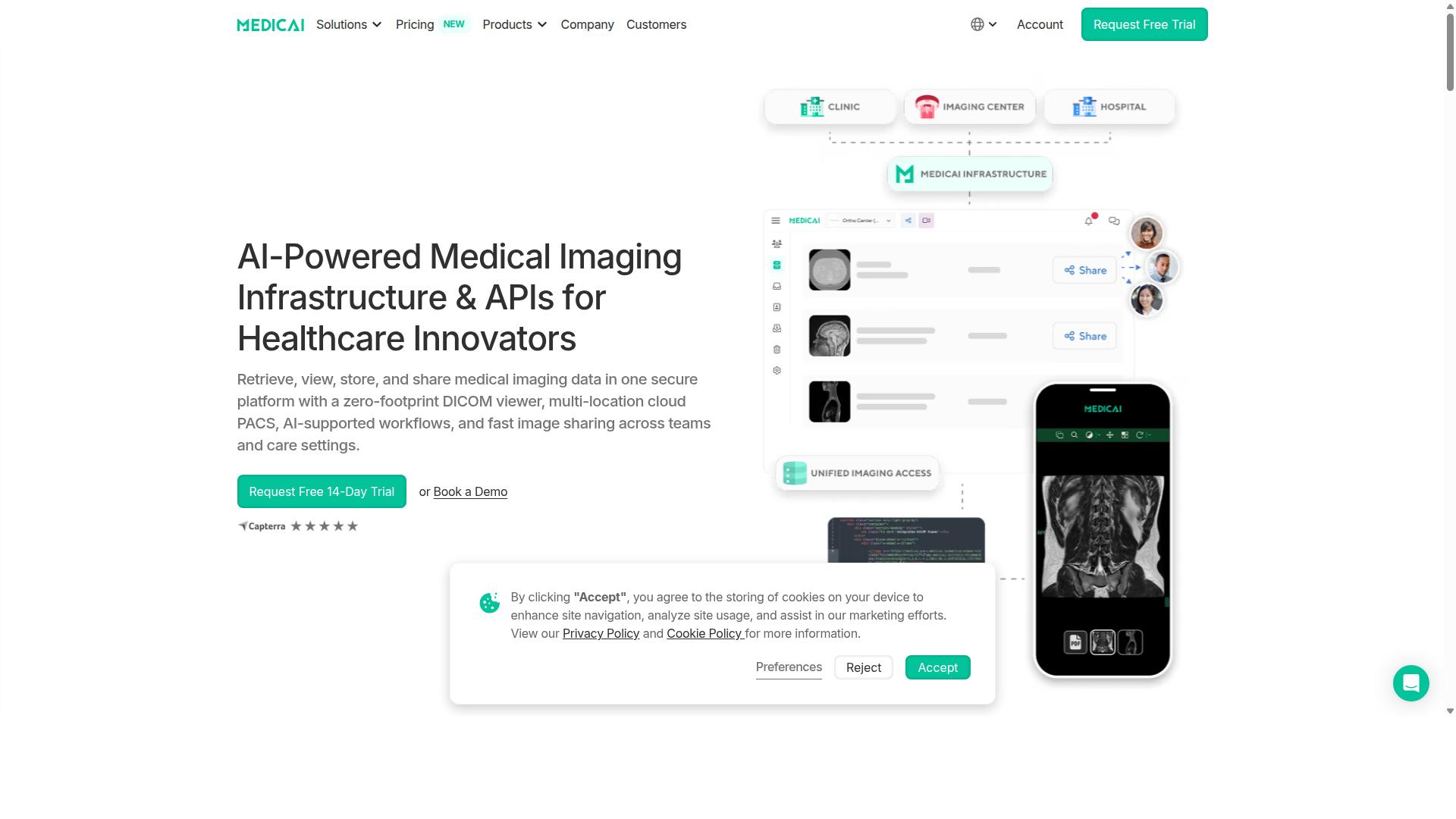
Medicai is a cloud-based medical imaging platform that lets providers upload, view, store, and share DICOM studies in a single HIPAA-compliant workspace.
The platform includes a zero-footprint DICOM viewer that requires no local installation. Users access studies from any browser with internet connectivity.
Multi-location cloud PACS supports unified storage across healthcare networks. Organizations consolidate imaging data from different sites into one secure archive.
Fast image sharing enables collaboration between teams and care settings. Providers send studies to referring physicians or specialists without physical media or VPN connections.
AI-supported workflows help streamline radiology processes. The platform provides Imaging Infrastructure as a Service (IIaaS) for healthcare organizations seeking modern radiology solutions.
What Is ProtonPACS?
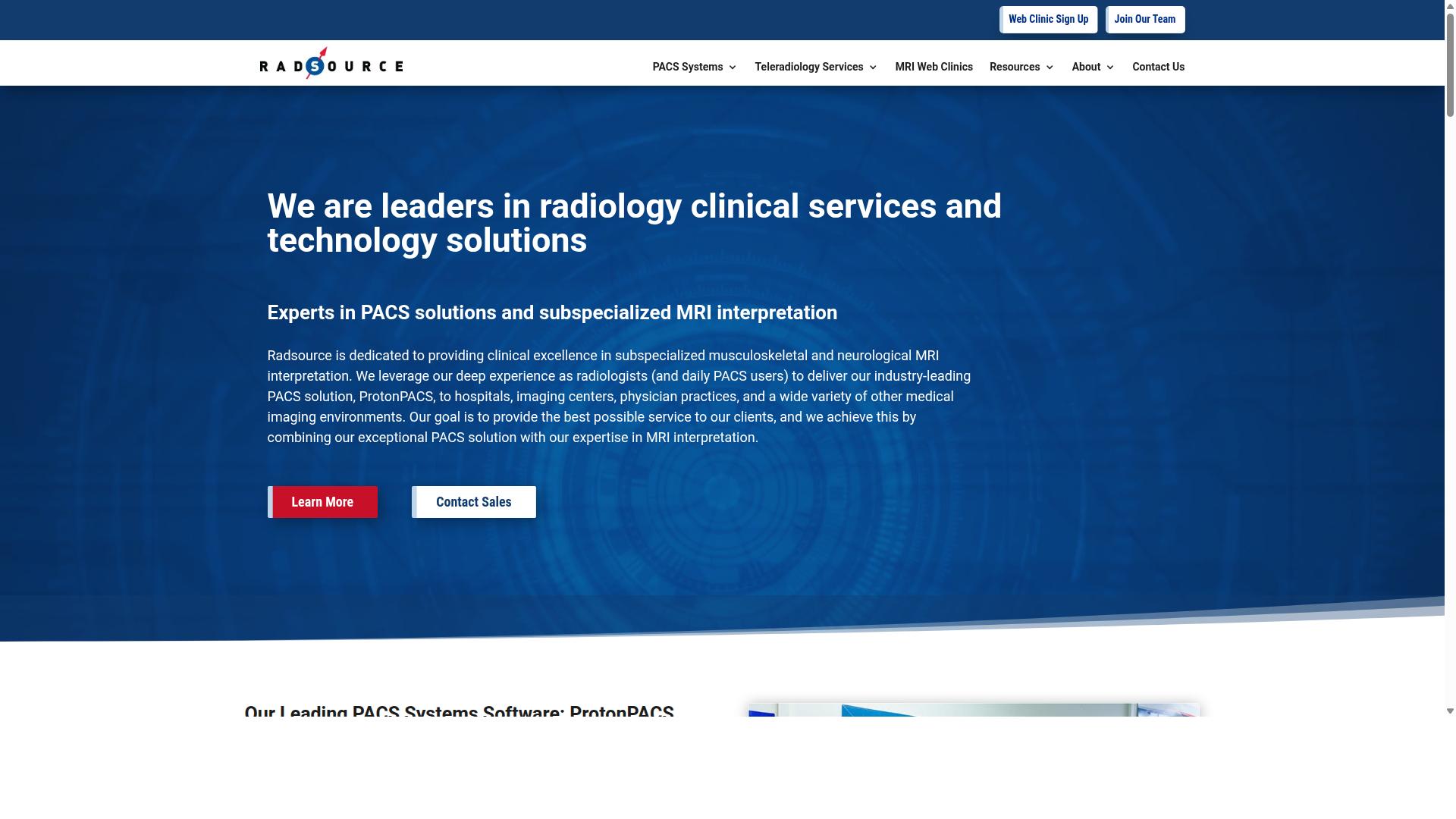
ProtonPACS is a radiology workflow solution offering cloud-based image archiving and viewing for diagnostic imaging centers. The system supports standard DICOM workflows that connect imaging equipment to digital storage and review tools.
Many imaging departments use ProtonPACS to manage study routing between multiple sites. This approach allows radiologists to access studies from different locations through a single interface.
Facilities that choose ProtonPACS often need to review pay-per-study pricing models. The cost structure depends on study volume and service levels that each center requires.
Comparison articles commonly contrast ProtonPACS with other cloud PACS options like PICOM365 and Medicai. Each vendor offers different pricing terms that affect total cost for imaging practices.
What Is PICOM365?
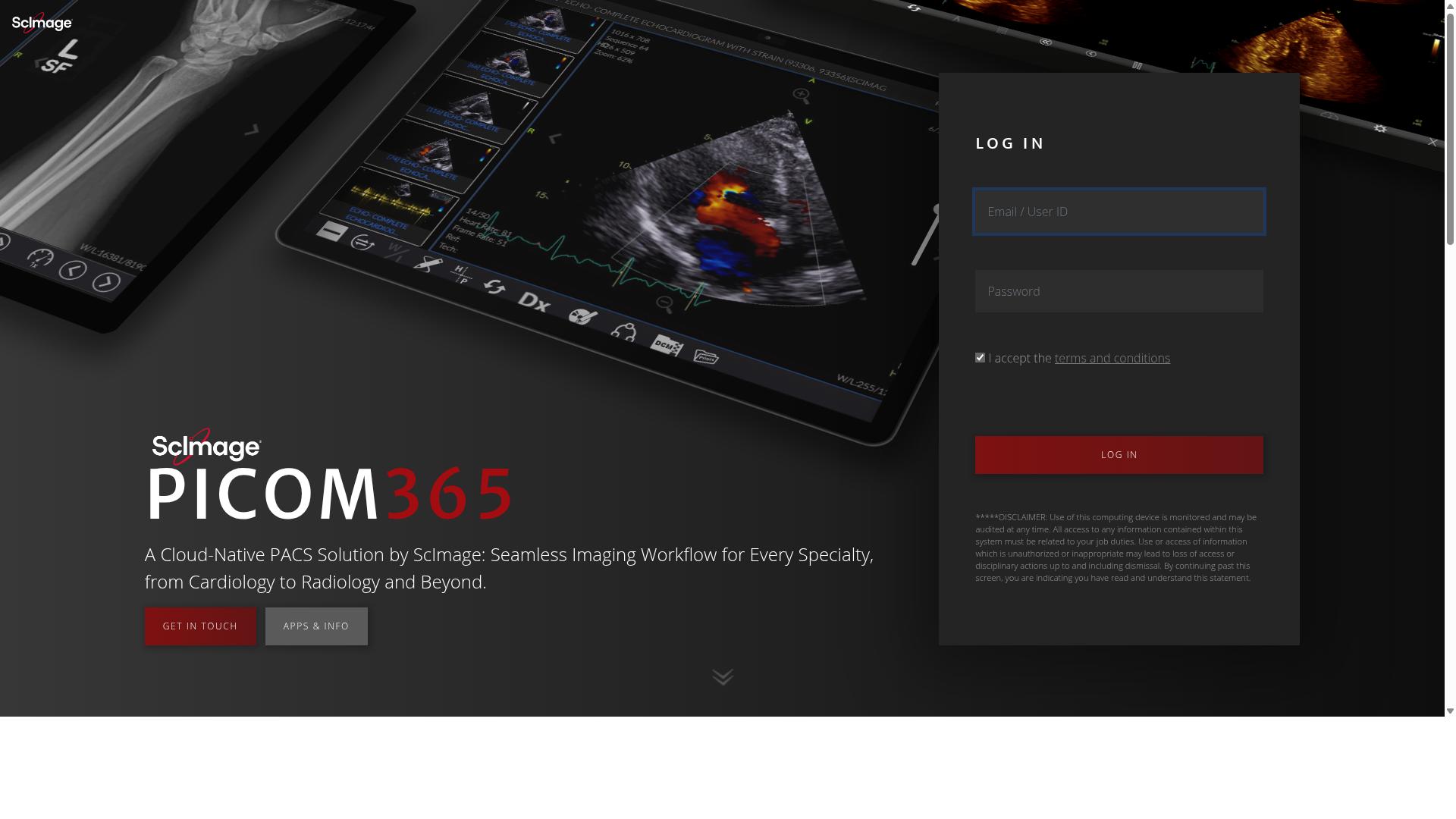
PICOM365 is an online radiology platform that provides access to imaging studies and reporting tools via the cloud.
Radiology departments use this type of service to manage studies without maintaining local servers. Cloud PACS solutions like PICOM365 allow teams to view images from different locations through a standard web browser.
Many practices consider this model when evaluating pay-per-study pricing options. The service handles storage and access as part of a single workflow.
Users can upload studies, review reports, and share results with referring physicians. The platform works with existing radiology workflow processes in clinics and hospitals.
Organizations compare systems like PICOM365, ProtonPACS, and Medicai when selecting a radiology SaaS provider. Each option presents different approaches to study pricing and image management.
What Is Medicai for Pay-Per-Study Pricing?

Medicai's pay-per-study option lets organizations transact individual studies without committing to monthly storage tiers.
This approach suits clinics and hospitals that handle variable imaging volumes or need temporary access to advanced radiology PACS tools. Organizations pay only for the studies they process, which supports efficient radiology billing without long-term commitments.
The platform processes studies through this flexible model. This transaction volume shows the system handles real clinical workloads across different practice sizes.
Users can upload studies once, process the images through cloud PACS infrastructure, and share them securely with referring physicians or specialists. The approach eliminates the need to maintain permanent storage for studies that require only temporary review.
Secure sharing follows HIPAA and GDPR compliance standards. Organizations maintain control over who accesses each study and for how long the images remain available.
The system supports imaging studies uploaded through this pay-per-study structure. This scale demonstrates the platform's ability to manage both routine and complex imaging workflows.
Compared to ProtonPACS and PICOM365, Medicai's pay-per-study model provides clearer cost visibility for organizations that cannot predict monthly study volumes. The approach works well for teleradiology groups, research collaborations, or facilities with seasonal imaging demands.
Features Compared
This section contrasts the core feature sets of ProtonPACS, PICOM365, and Medicai to help radiology teams evaluate functional fit.
Each platform offers different approaches to storage capacity, viewing capabilities, and automation tools. The choice affects daily workflow efficiency and long-term scalability.
Pay-per-study pricing models add another layer of evaluation since feature access may vary between subscription tiers and usage-based plans.
Cloud PACS Storage & Multi-Location Access
Storage capacity and site connectivity determine whether a platform can scale with a growing radiology practice.
Medicai provides clear storage tiers through its monthly billing structure. The Starter plan includes 500 GB of cloud storage with unlimited user accounts but no connected locations. The Standard plan offers 2 TB of cloud storage with unlimited users and one connected location.
Enterprise customers receive custom cloud storage allocations that support multiple connected locations and external sites. Yearly billing options reduce monthly costs by 15 percent across all tiers.
ProtonPACS and PICOM365 offer storage solutions that scale with practice needs, though specific capacity limits depend on individual agreements. Both platforms support multi-location access through their respective cloud architectures.
Multi-location connectivity becomes essential when practices expand across different facilities or geographic regions. The ability to maintain centralized access while supporting distributed reading workflows affects both productivity and patient care coordination.
Zero-Footprint DICOM Viewer & Structured Reporting
A zero-footprint viewer eliminates local installs and supports structured reporting directly in the browser.
Medicai delivers an FDA and CEE-cleared zero-footprint viewer. The browser-based interface removes software installation requirements while maintaining full DICOM viewing capabilities.
Structured reporting integrates directly within the viewing environment. This approach reduces the need to switch between separate applications during interpretation and documentation tasks.
ProtonPACS and PICOM365 provide web-based viewing solutions that support standard DICOM protocols. Both platforms enable browser access without local software requirements, though specific reporting features vary by implementation.
Zero-footprint architecture proves particularly valuable for teleradiology workflows and multi-site reading assignments. Radiologists can access studies from any location with internet connectivity while maintaining consistent viewing quality across different devices.
AI-Supported Workflows & Image Exchange
AI tools and secure image exchange streamline turnaround time and cross-site collaboration.
Medicai maintains partnerships with specialized AI vendors. Current collaborations include Rayscape.ai and MD.ai for enhanced diagnostic support capabilities.
These integrations enable automated preliminary analysis and structured data extraction from medical images. The transaction volume demonstrates platform reliability for practices requiring consistent AI-assisted workflows.
ProtonPACS and PICOM365 incorporate AI capabilities through various third-party integrations and built-in tools. Both platforms support image exchange protocols that facilitate secure sharing between healthcare facilities and referring physicians.
Image exchange functionality becomes critical when practices participate in multidisciplinary tumor boards or provide teleradiology services across different healthcare systems. The combination of AI support and secure exchange protocols directly impacts diagnostic efficiency and referral network relationships.
Pricing Compared
Transparent pricing helps radiology groups forecast costs and choose the right consumption model.
Traditional cloud PACS vendors often structure fees around monthly subscriptions or per-study charges. ProtonPACS and PICOM365 follow this approach, though exact rates vary by volume and contract terms.
Medicai offers two fixed tiers plus enterprise flexibility. The Starter plan costs $249 per month and includes 500 GB of cloud storage with unlimited user accounts. The Standard plan costs $749 per month and provides 2 TB of storage plus one connected location.
Enterprise customers can select pay-per-study pricing instead of fixed monthly fees. This model suits groups with variable study volumes or seasonal demand spikes.
The listed prices reflect monthly billing. Annual commitments reduce the Starter plan to $209 per month and the Standard plan to $639 per month, delivering 15 percent savings for groups that prefer yearly contracts.
Each additional location requires a one-time $1,000 DICOM Gateway setup fee. A 14-day trial of the Starter features is available without entering payment details.
| Plan | Medicai | ProtonPACS | PICOM365 |
|---|---|---|---|
| Base pricing | Fixed monthly tiers | Subscription or per-study | Subscription or per-study |
| Study model | Enterprise pay-per-study option | Volume-based rates | Volume-based rates |
| Storage included | 500 GB or 2 TB per tier | Contract dependent | Contract dependent |
Who Should Choose Medicai
Medicai targets multi-site radiology groups that need predictable storage and rapid study sharing. Hospitals, imaging centers, and specialty practices often face unpredictable costs when they rely on pay-per-study models.
Unlimited user accounts let these organizations avoid extra charges when they add radiologists, referring physicians, or support staff. This flexibility supports growth without recalculating fees each quarter.
Global availability ensures studies move quickly across regions. Radiology groups that serve patients in different time zones benefit from consistent access and fewer delays in diagnostic workflows.
Specialty care providers such as orthopedics, neurology, oncology, cardiology, and ophthalmology also benefit. These practices often need reliable image archives and smooth collaboration between multiple sites.
Teleradiology services and virtual care platforms face similar challenges. Global availability and unlimited accounts reduce barriers when they expand into new markets or add remote readers.
Personal injury lawyers and tumor boards require secure, fast image access. Medicai supports their needs with consistent performance across locations and no per-user fees that can add up quickly.
Medical education organizations and clinical trials often juggle large volumes of studies. Predictable storage costs and broad geographic reach help them maintain budgets while maintaining compliance standards.
Compared with ProtonPACS and PICOM365, Medicai's model avoids per-study charges altogether. Organizations that process high volumes of studies gain cost stability and simpler billing.
Patient portals extend the same access to patients. This feature helps hospitals and imaging centers meet expectations for easy sharing while keeping all data within a single, controlled environment.
Who Should Choose ProtonPACS
ProtonPACS may suit practices that prefer a single-vendor radiology PACS with traditional deployment options. This approach fits imaging centers seeking conventional archiving solutions. Many facilities choose this model when they want familiar infrastructure for their daily operations.
ProtonPACS works well for groups that maintain on-site servers and have established IT teams. These centers often handle their own maintenance schedules and security protocols. Traditional deployment allows direct control over hardware and data storage locations.
Some practices prefer ProtonPACS because it aligns with long-standing radiology workflows. Staff members who have used similar systems find the transition straightforward. The single-vendor approach can simplify support relationships and contract management.
Imaging centers that process high study volumes on a consistent schedule may benefit from this setup. Fixed infrastructure costs become predictable when study counts remain stable month to month. Conventional archiving supports facilities that keep studies locally for extended periods.
Practices should evaluate ProtonPACS when their needs match these characteristics. The pay-per-study model offers different advantages for facilities with variable volumes. Comparing options like PICOM365 and Medicai helps determine which radiology PACS structure matches specific operational requirements.
Who Should Choose PICOM365
PICOM365 appeals to smaller radiology teams that want straightforward cloud access to studies and reports. Independent practices often prefer this option when their study volume stays consistent month to month.
Pay-per-study pricing removes the need to predict storage growth or commit to long contracts. Teleradiology groups may find this flexibility useful when reading for multiple sites with different needs.
Fewer administrative tasks appear with this model. Billing remains tied to actual study counts instead of fixed fees or minimums that can accumulate quickly.
Some users value the limited setup requirements. A basic DICOM viewer and simple report access often meet daily demands without additional training.
That said, practices should consider how their workflow might expand. Pay-per-study can become costly if study volumes increase beyond initial projections or if more advanced features are needed later.
Final Verdict
The best choice hinges on required storage scale, pay-per-study flexibility, and integration depth. Organizations managing large imaging volumes often face hidden costs when storage limits force plan upgrades or when per-study fees escalate quickly.
ProtonPACS and PICOM365 each offer pay-per-study options, but the fine print on storage caps, compliance tiers, and add-on fees can change the final cost structure. Hospitals and imaging centers need clarity on how quickly those costs grow once study counts increase.
Medicai meets both HIPAA and GDPR requirements. This combination gives providers a predictable cost path while maintaining regulatory compliance across multiple jurisdictions.
Facilities evaluating radiology PACS solutions often compare three factors: total storage capacity, per-study pricing transparency, and security certifications. Medicai addresses each of these directly through its SaaS platform.
Providers seeking to expand across regions benefit from Medicai having established offices in both the United States and Europe. This geographic presence supports faster support response and clearer compliance alignment with local regulations.
Next steps include contacting Medicai USA at 7901 4th St N, STE 300, St. Petersburg, FL, 33702 or calling +1 (832) 220 1035. In Romania, reach the team at 53-55 N Filipescu, 5th Floor, Sector 2, Bucharest, 020961 by dialing +40 316 305 875 or writing to [email protected].
Recommended Resources: